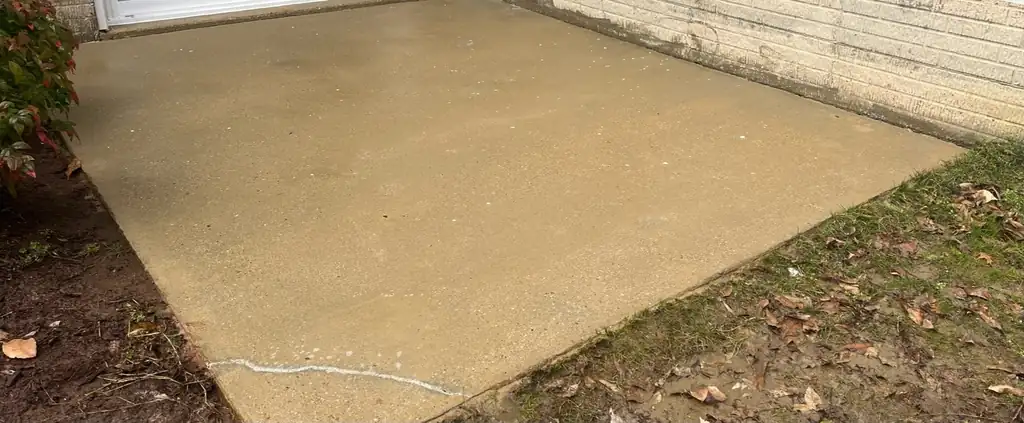
Why concrete and pavers hold on to every stain
Concrete and brick pavers act like sponges. Oil from the garage, the green film from a damp corner and the gray left by years of road grit all sink into the surface instead of sitting on top of it. That is why a quick pass with the hose never brings a driveway back, and why these surfaces are difficult to clean. The same porous quality that traps the stain also lets in moisture, and moisture is where the damage starts.
Neglect follows a predictable path: premature cracking, pitting and spalling, where the face of the slab flakes away. Mold and mildew settle into the pores and keep coming back. By the time a driveway, patio or sidewalk is visibly breaking up, the cleaning is the smaller job. Regularly cleaning and sealing costs less than pouring a new slab, and that is the math a lot of Beaver County homeowners run once the cracks show.
Wash first, then choose the sealer that fits the slab
We clean the surface before anything goes on it, because sealing over dirt only locks the dirt in. Driveways, patios, sidewalks, steps and brick walks get the same order of work: wash the concrete or the pavers until they are clean, then seal. The wash alone already changes how a basement stairwell or a herringbone walk looks, but the seal is what keeps it that way.
There are two kinds of sealer, and they do different jobs. A topical sealer forms a layer on the surface and suits exposed aggregate and stamped concrete. A penetrating sealer works as a chemical barrier against moisture. Which one fits depends on the surface in front of us, so we choose it for your concrete instead of carrying one product for every slab we see.
Sealants inhibit molds, increase durability and protect from staining. Whether it is pavers in Monaca, steps in Ambridge or a long driveway in Cranberry Township, the method is the same, and the quote depends on the square footage, the surface type and how involved the job is. Call or text (724) 846-8730 and we will give you a free estimate.
Reseal every two to three years before the surface gives out
Clean and reseal every two to three years. That is the interval we recommend because a sealer wears with traffic and weather, and once it does the slab starts absorbing water and stains again. Treat the date like any other maintenance item. A driveway sealed on schedule keeps its tone and its surface, while one left alone ends up in the repair column.
You will know it is due when water soaks in dark instead of beading, when green creeps in along the edges, or when small pits start to show. Catch it early and a wash and reseal handles it. Once the face has spalled, no sealer brings it back. We are licensed in Pennsylvania (PA License #PA059849), fully insured, and back the work with a satisfaction guarantee. Send the details through the contact page and we will quote it.