Sealing a Concrete Driveway in Western Pennsylvania
A driveway that looks solid is full of tiny pores, and in Beaver County those pores take on water all year long.
October 19, 2026 · 3 min read
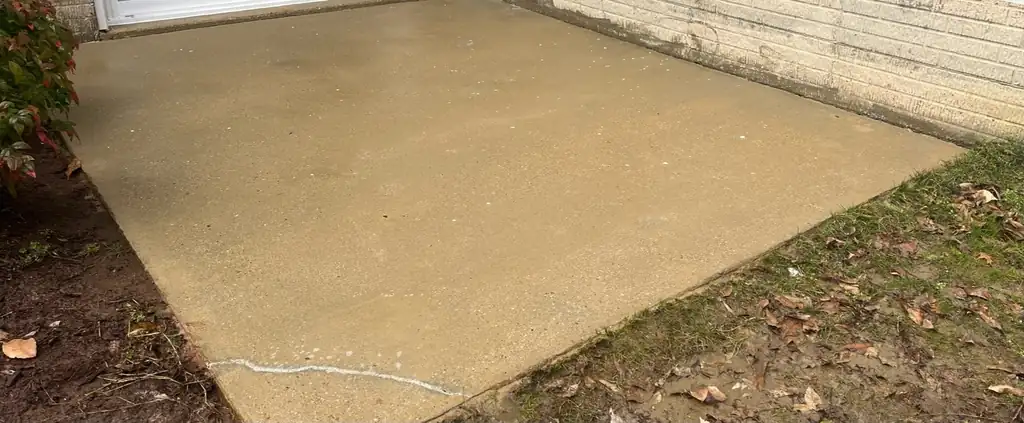
Concrete looks like the toughest thing on your property. A driveway, a front walk, a patio slab: poured once, expected to last. The surprise is that concrete is porous. Beneath the surface is a network of tiny openings, and in western Pennsylvania those openings take on water all year long. That's why a driveway that looked fine a few winters ago now has dark patches, rough spots, and flaking edges.
Why concrete acts like a sponge
Concrete and brick pavers behave a lot like sponges. They drink up rain, snowmelt, road salt, oil drips, leaf stains, and whatever else lands on them. That moisture is the root of most problems, and it also makes the surface hard to clean. Stains sink in rather than sitting on top, so a quick spray rarely gets them out.
Then comes winter. Water that has soaked in freezes, expands, and pushes at the concrete from the inside. Thaw, refreeze, repeat all season. Over the years that cycle leads to premature cracking, pitting, and spalling, where the top layer flakes away and exposes rougher material underneath. Once spalling starts, it tends to keep going.
Topical sealers and penetrating sealers
There are two main kinds of sealer, and they do different jobs. A topical sealer forms a layer on top of the surface. It tends to suit exposed aggregate and stamped concrete, where you want to protect the surface and bring out its look at the same time. A penetrating sealer soaks in and builds a chemical barrier against moisture inside the pores, leaving the surface looking natural, without a film on top.
Which one is right depends on the slab: how it's finished, how much traffic it sees, and what you want it to look like. A plain broom-finished driveway and a stamped patio don't necessarily want the same product. That's a good thing to talk through during an estimate rather than guess at.
Clean first, then seal
Sealing over dirt just locks the dirt in. The surface has to be properly cleaned first, which means removing grime, algae, and old residue, treating oil staining where possible, and letting the concrete dry fully before any sealer goes on. Pressure on concrete is a different matter than on siding. The slab can take more, but a careless wand still leaves stripes and etched lines, so even, steady passes matter.
Pavers add one more wrinkle. The joints between them hold sand, and weeds and moss take root there. Cleaning has to lift the growth without blasting out the joint material, and sealing pavers helps hold the surface together and slow staining. Steps, stoops, and walkways deserve the same attention as the big flat areas, because they stay wet longest and they're the places people slip.
Cleaning also shows you the real condition of the slab. Hairline cracks, low spots that hold water, and crumbling edges all become visible once the surface is clean, and they're easier to deal with before sealing than after.
What sealing does for the slab
- It inhibits mold and mildew, which love a damp, porous surface.
- It increases durability by keeping water out of the concrete.
- It protects against staining from oil, rust, and salt.
- It makes later cleaning easier, since less soaks in.
Clean and reseal every two to three years
Sealer wears down under tires, shovels, sun, and weather, so it isn't a one-time job. A good rule is to clean and reseal every two to three years. Driveways that take heavy use, or sit in full exposure, may want it toward the shorter end. Walkways in the shade stay damp longer, so they pick up growth faster and deserve a look as well.
Timing helps too. Getting the slab clean, dry, and sealed before the freeze season starts means less water is going in when the cold arrives. Late summer and early fall are natural windows, when the days are warm enough for everything to dry properly.
Upkeep costs less than a new slab
The math favors maintenance. Regularly cleaning and sealing your driveway, patio, and sidewalk is less expensive than pouring a new one. Replacement means breaking out the old slab, hauling it away, forming, pouring, and waiting for it to cure, plus whatever that does to your yard and your week. Upkeep is the quiet choice that keeps all of that off your calendar.
If your concrete is darkening, flaking, or just looking tired, call or text Powerwash Mobile Cleaning Service at (724) 846-8730 for a free estimate. We'll look at the slab, explain which sealer fits, and quote the work upfront with no hidden fees.
Powerwash Mobile Cleaning Service, (724) 846-8730
Call (724) 846-8730More articles
Why a House Wash Should Never Be a High-Pressure Blast
The strongest nozzle is the fastest way to turn a dirty house into a damaged one, and there is a better way to get the green off.
Getting Your Wood or Composite Deck Ready for Spring
The order you do things in matters more than most people expect, starting with the right cleaner for the right board.