Why a House Wash Should Never Be a High-Pressure Blast
The strongest nozzle is the fastest way to turn a dirty house into a damaged one, and there is a better way to get the green off.
October 19, 2026 · 4 min read
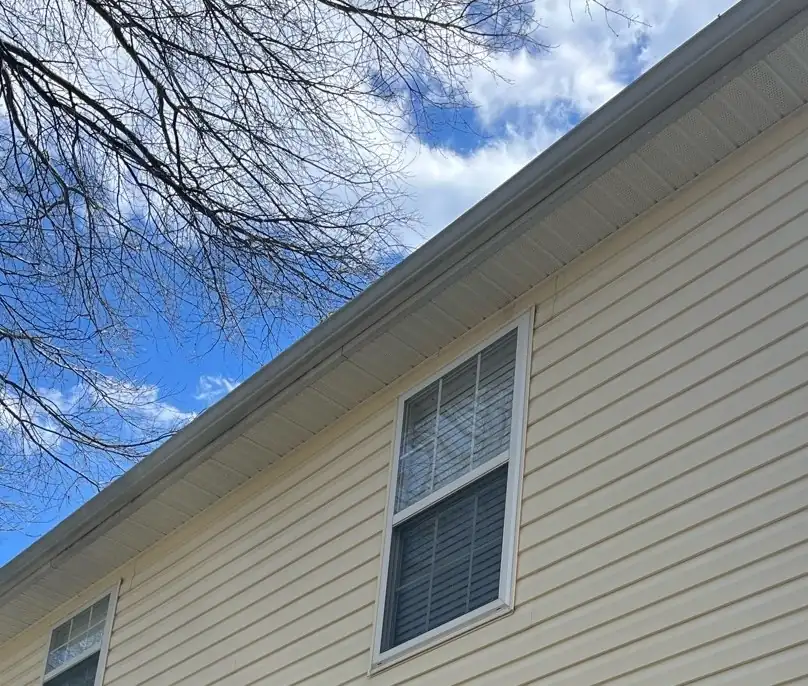
Walk through any neighborhood in Beaver County in late summer and you can spot the houses that haven't been cleaned in a while. Green film on the north side, grey streaks under the eaves, a dull cast across the siding that wasn't there when the house was new. The tempting fix is the strongest pressure washer you can rent and a Saturday afternoon. It's also the fastest way to turn a dirty house into a damaged one. Here's how a proper house wash works, and why gentle usually beats hard.
What a hard blast does to your siding
Vinyl siding is thin, and it overlaps in courses that are built to shed rain downward. Aim a narrow, high-pressure stream upward and you can drive water behind those laps and into the wall, where it sits against the sheathing and never dries out properly. Aluminum can dent or lose its finish. Wood can be gouged, leaving furry, torn grain that holds even more dirt next time. Soft brick can lose its face, and mortar joints can be etched out. Even stone can be pitted if the nozzle is too close. Damage like that shows up as lines, stripes, and fuzzy patches, and none of it washes away.
Pressure also does something sneaky. It scours off the top of the stain while leaving the roots of the growth in place. The house looks better for a few weeks and then greens up again, sometimes faster than before.
Soft washing: let the cleanser do the work
A proper house wash combines safe pressure with cleansers that do the real work. The solution goes on at low pressure and gets time to loosen and kill what's growing on the surface. Then the house gets a thorough rinse, working from the top down so dirty water doesn't streak a wall you just cleaned. At Powerwash Mobile Cleaning Service, the cleansers are biodegradable and eco-friendly, and the method is meant to be safe for your home and your pets. That's the difference from the splash-and-dash approach, where harsh detergent is sprayed on, rinsed off, and the crew drives away. A premium cleaning treatment takes more care than that.
Different surfaces want different handling, which is why a one-setting approach doesn't work.
- Vinyl and aluminum: low pressure, cleanser dwell time, and a careful rinse that doesn't push water up under the laps.
- Brick and stone: enough force to rinse out the pores without eating at the mortar or the face of the material.
- Wood: the gentlest touch of all, because the grain tears easily and old paint or stain can lift in patches.
- Trim, caulk lines, and painted edges: kept away from close-range spray so they stay intact.
Mildew and algae are living things
The green, black, and grey on your house isn't just dirt. It's mold, mildew, and algae, and it grows where a surface stays damp: the shady north wall, the side tucked behind evergreens, the stretch below a gutter that overflows. Humid western Pennsylvania summers feed it, and freeze-thaw winters leave plenty of moisture sitting in seams and cracks. Dirt can be rinsed away. Growth has to be treated so the spores die, and that takes a cleanser rather than raw force. A good house wash eliminates mildew spores along with the grime that feeds them, which is why a properly done job tends to stay clean longer than a blasted one.
Why the siding sealant afterward matters
Each house wash we do is followed by an application of siding sealant. Think of it as a protective coat that gives the surface a little more resistance to the next round of dirt and growth, so the siding is easier to keep clean. It's one extra step, and it's the one most do-it-yourself jobs and quick-turnaround crews skip.
Shrubs, plants, and how often to wash
Cleanser and runoff shouldn't be hitting your foundation plantings, so we cover shrubs before washing. It's a small habit that tells you a lot about how a crew treats a property. Before anyone starts, walk the house together. Point out loose siding, cracked caulk, a window that has leaked before, and anything delicate you want protected.
As for timing, an annual wash is a sensible routine for most homes. Growth that's caught early rinses off easily. Growth that has been allowed to build for several seasons is thicker, takes longer to treat, and has usually started working into the surface. Houses surrounded by trees, or sitting low and damp, may want attention more often.
If your house has gone green or streaky, or you're not sure what your siding can take, call or text Powerwash Mobile Cleaning Service at (724) 846-8730 for a free estimate. We'll look at the surfaces, tell you what the job involves, and give you upfront pricing with no hidden fees.
Powerwash Mobile Cleaning Service, (724) 846-8730
Call (724) 846-8730More articles
Sealing a Concrete Driveway in Western Pennsylvania
A driveway that looks solid is full of tiny pores, and in Beaver County those pores take on water all year long.
Getting Your Wood or Composite Deck Ready for Spring
The order you do things in matters more than most people expect, starting with the right cleaner for the right board.